

Agents for consequential work

Fairloom

Five-spoke wheel Trustworthy action

Fairloom builds agents that can act in the world without becoming the authority. Mimi acts for people, Psyche creates and specializes agents, and Dao redesigns software under proof.

Mimi Personal economic action with approvals and receipts.
Psyche Agents created by conversation, then taught by use.
Dao Software redesign driven by expert waves and gates.

Operating doctrine

Models propose. Typed systems enforce.

Natural language is intent, not authority. Important actions need stronger rails: scopes, approvals, deterministic gates, receipts, and recovery paths.

Intent The user can ask in plain language without granting blanket authority.
Permission Actions run inside explicit scopes, spending limits, and tool boundaries.
Gate Expensive, unusual, destructive, or irreversible moves pause.
Receipt Money moves, tool calls, and migration steps leave reviewable evidence.
Recovery Support, rollback, dispute, and repair paths are product surfaces.

Three products

One product family for action, agent creation, and software proof.

The products are separate enough to be understood quickly, but they share one trust grammar: model output is a proposal, system evidence is the authority.

Phone showing a payment confirmation beside receipts and a meal

Personal economic operator

Mimi

Lotus coin mark. Hestia character.

A personal agent for everyday economic life: start with mobile money, a dollar balance, cash-out, and receipts, then grow toward purchases, bills, and approved plans.

Starts narrow: verified money loop. Grows carefully: preference memory and approvals.
Open Mimi ->
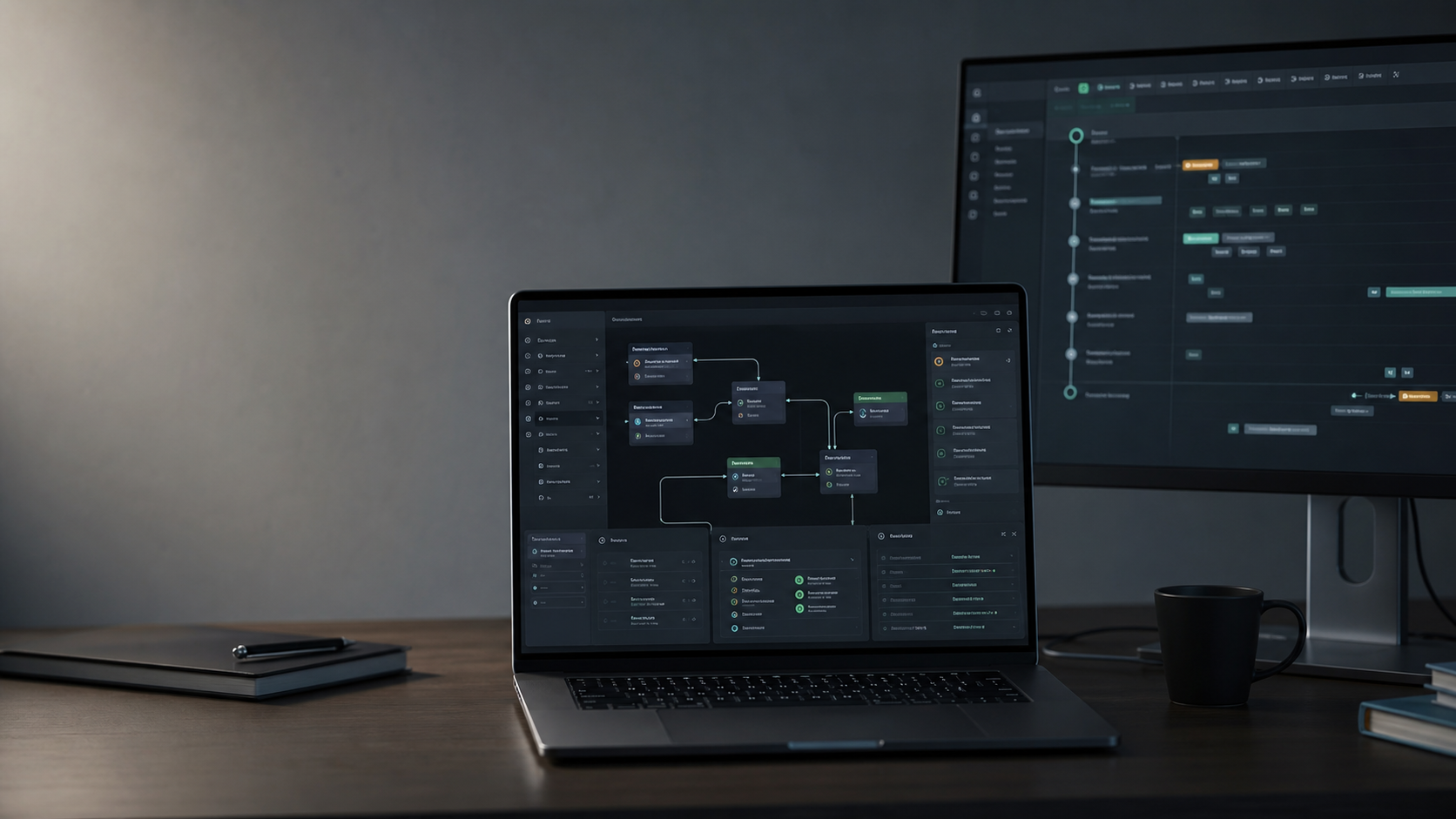
Developer workspace with agent workflow panels across laptop and monitor

Agent creation runtime

Psyche

Butterfly mark. Aristotle character.

Create agents by talking to Psyche. It turns goals into memory, tools, permissions, tests, UI, and a running agent that can specialize from rewarded use and later inhabit richer surfaces.

Conversation becomes inspectable runtime objects. Repeated work can become a local or embodied specialist.
Open Psyche ->
Engineering desk with verification dashboards and architecture notes

Software architect and proof engine

Dao

Yin-yang mark. Zhuangzi character.

Dao redesigns codebases through expert design waves, bounded AI workers, parity checks, design audits, and deterministic gates that prove the work.

Coding agents are workers; Dao is the judge. Rewrites advance only when gates stay green.
Open Dao ->

System map

The stack starts with people and ends with evidence.

01

Mimi acts for people.

It starts from everyday money jobs: add, hold, cash out, pay, buy, and follow approved plans with receipts.

02

Psyche creates the agents.

It turns conversation into durable agents with memory, tools, UI, permissions, evals, future local specialization, and embodied surfaces.

03

Dao proves the systems.

It studies the scars, proposes a better architecture, drives AI workers, and blocks progress until gates are green.

Symbols and characters

The visual language makes the product roles memorable.

Fairloom

A brown five-spoke wheel: action, constraint, proof, receipt, and recovery.

Mimi / Hestia

A lotus coin and household steward for meals, bills, plans, and practical money movement.

Psyche / Aristotle

A butterfly for transformation: from conversation to agent to practiced local specialist.

Dao / Zhuangzi

Yin-yang for redesign under proof: new architecture balanced by evidence.